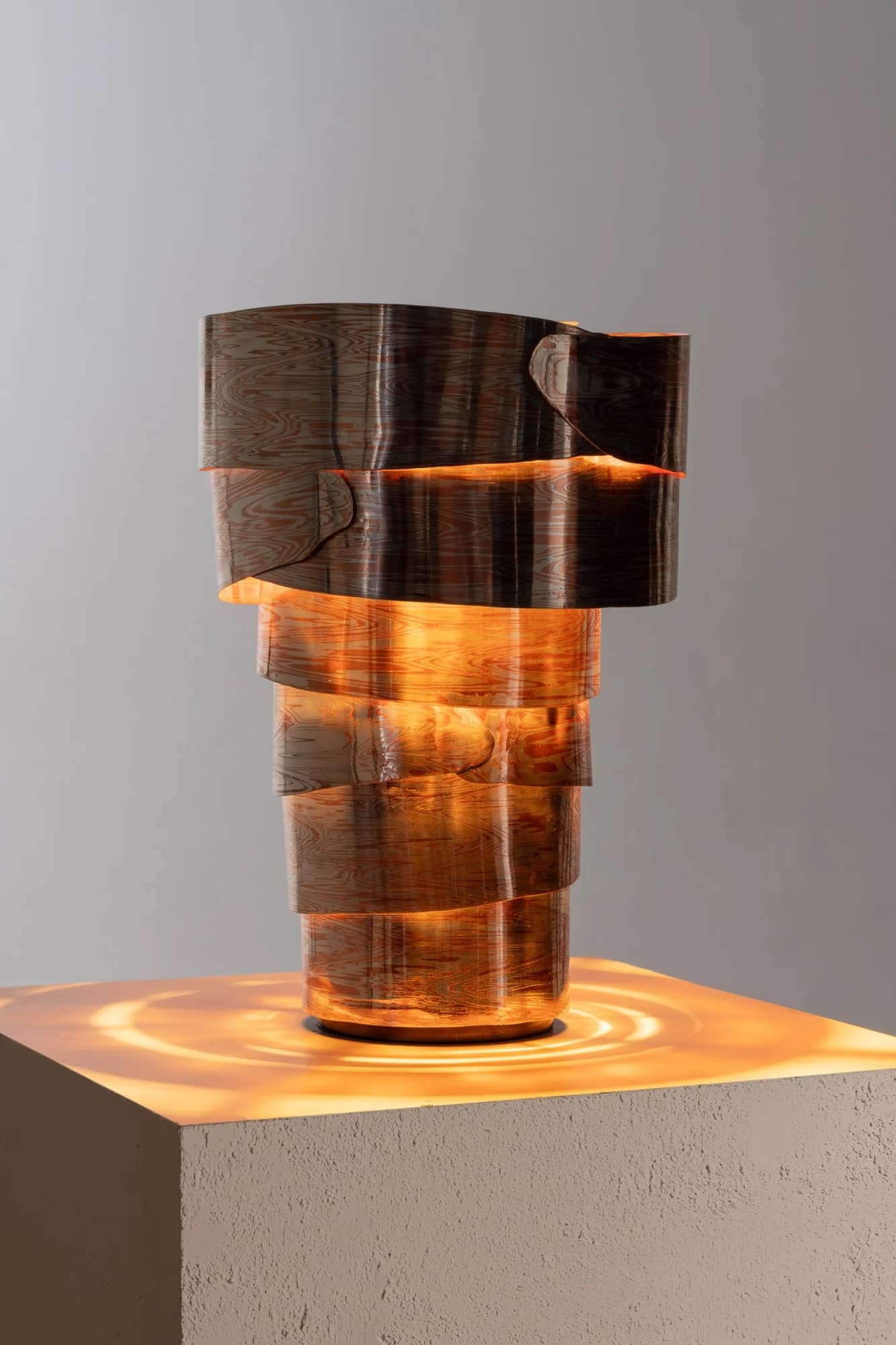
Unique Objects
Lamp “Layers of Memory”
Mokume-gane (silver and copper)
Price on request
Handcrafted · Passport and serial number · One-of-a-kind pattern
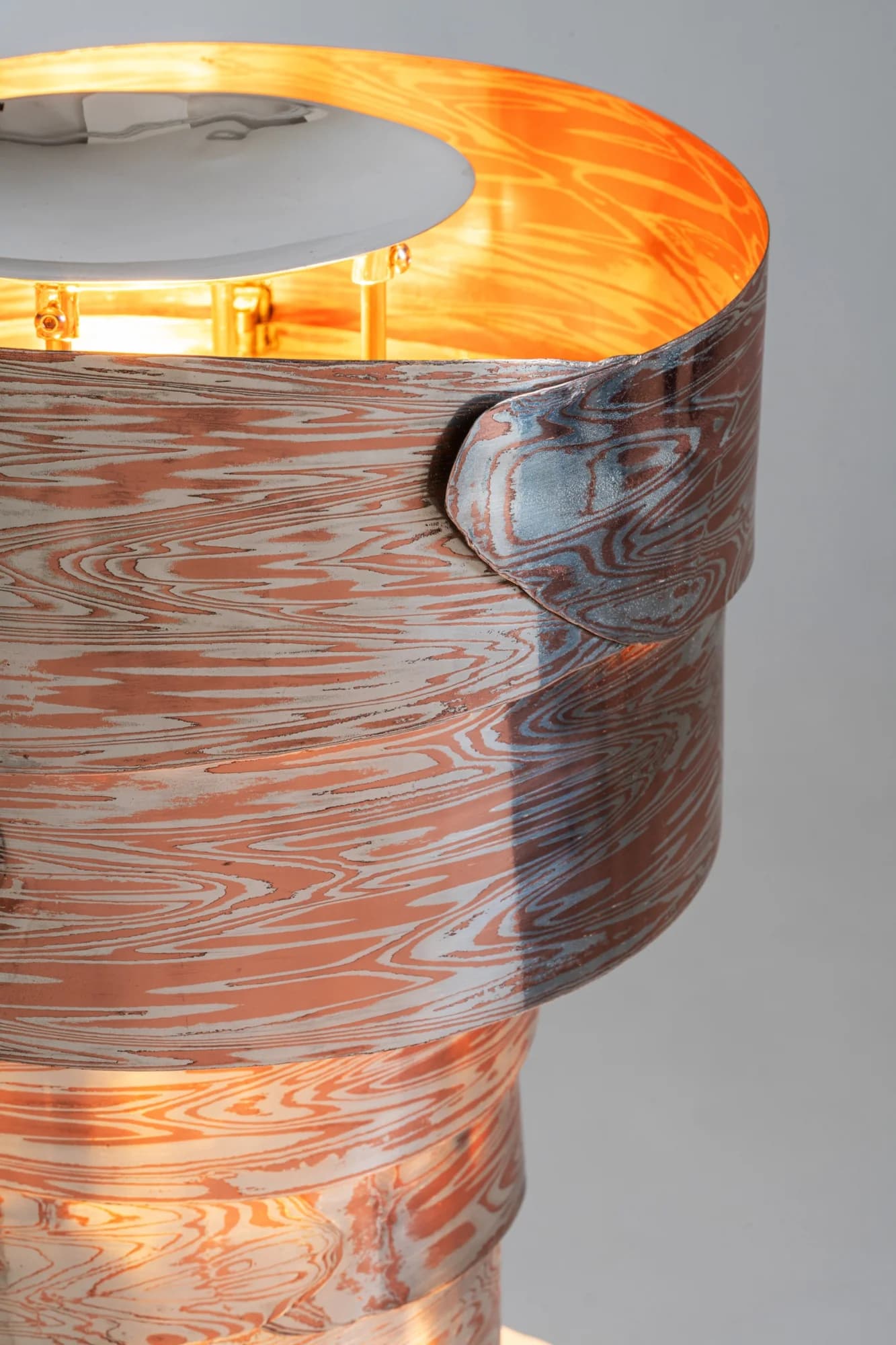
The object explores the idea of layers — both material and those that shape human experience.
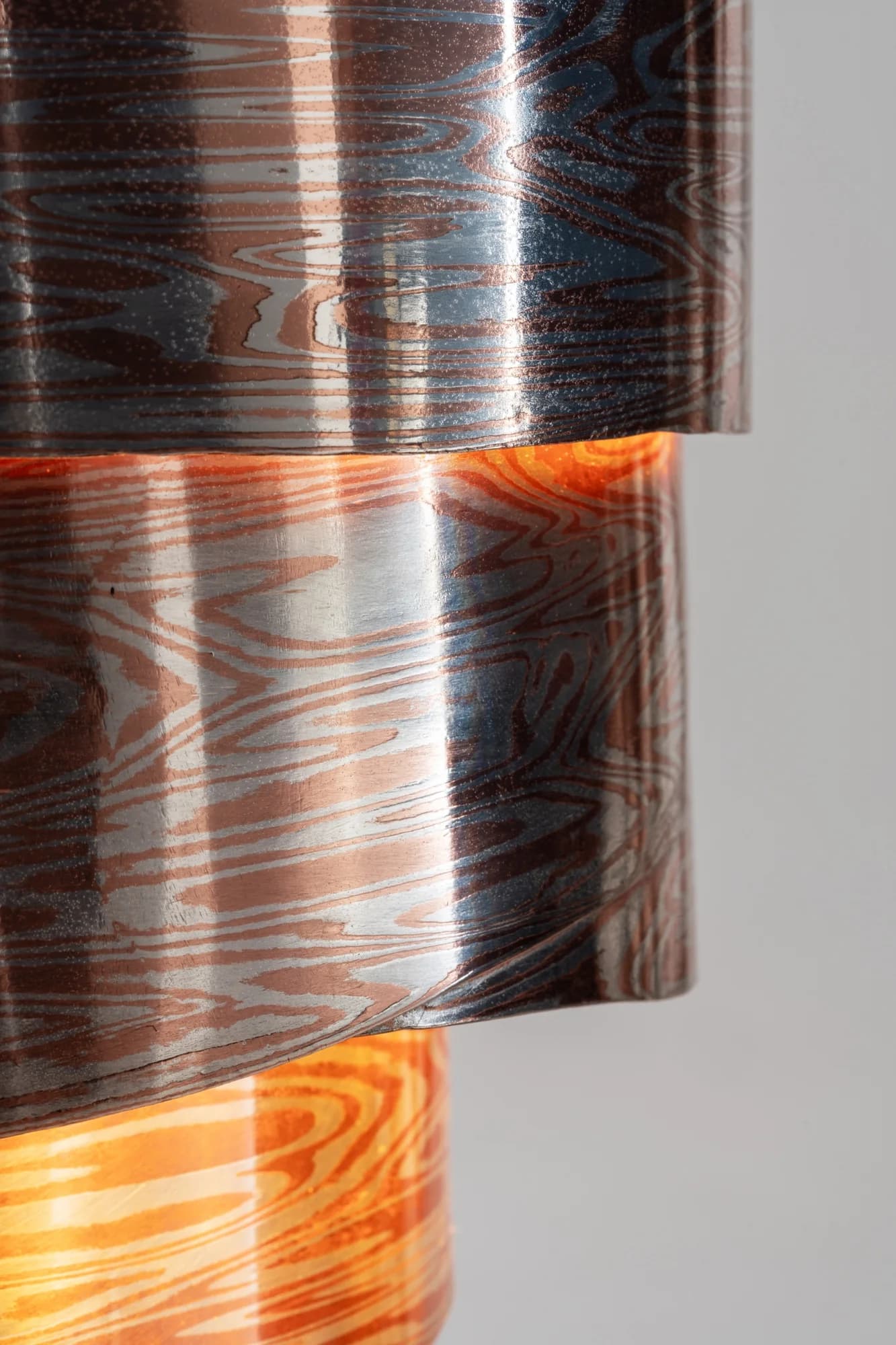
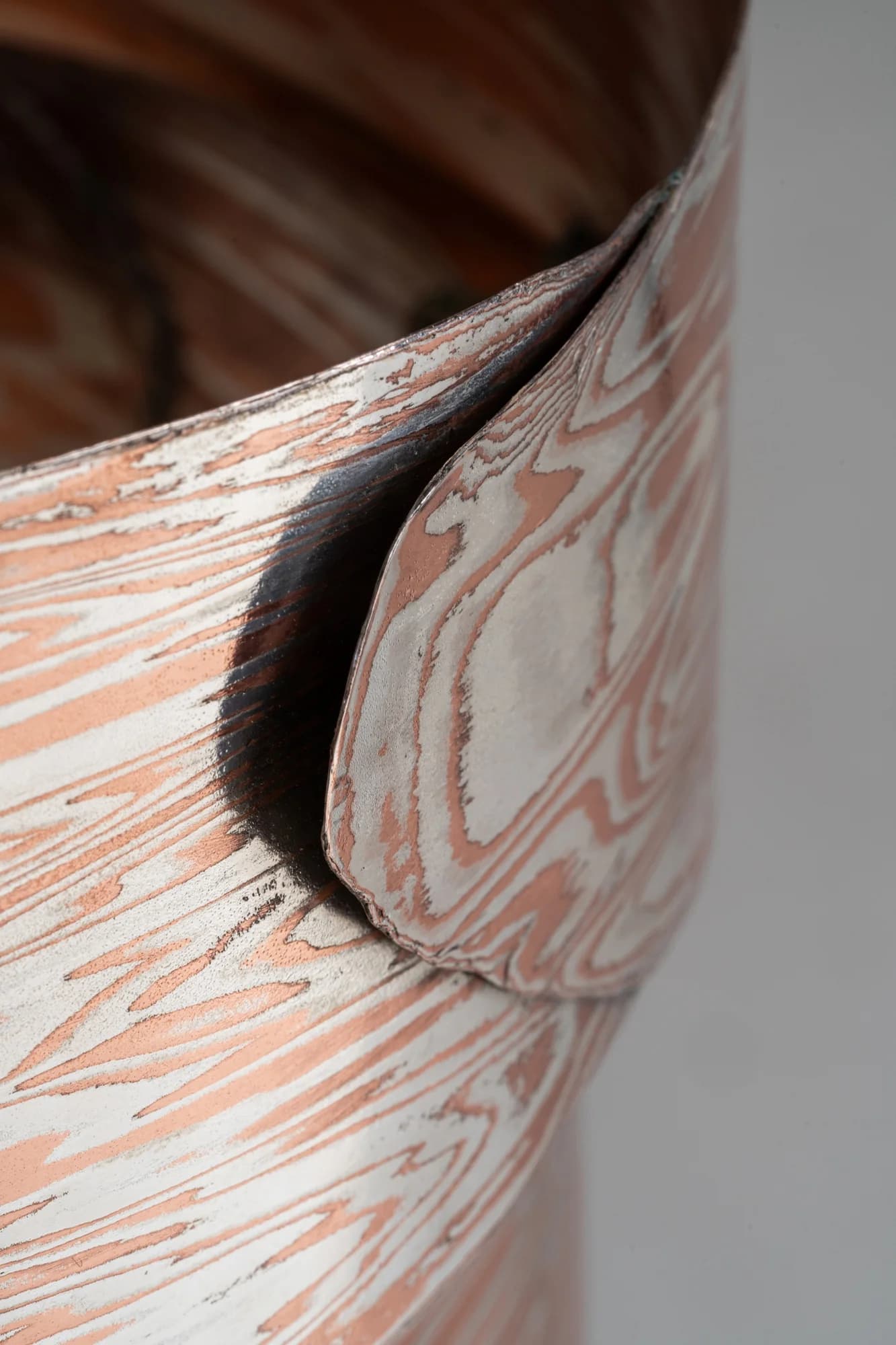
At the heart of the lamp are plates crafted using mokume-gane, an ancient Japanese art of metalworking. Masters carefully join successive layers of silver and copper, then roll them together to create a unique pattern that can never be replicated.
- Dimensions
- Height 43 cm · diameter 30 cm
- Light
- LED, full RGB spectrum
- Power
- Built-in battery, cable charging
- Control
- Remote, via smartphone
How it is made
FROM BUKHARA ARTISANS:
We create unique precious objects using mokume-gane — an ancient art of joining layers of different metals into a single body, creating an unrepeatable pattern. We develop this technique beyond the traditional jewellery format, exploring its possibilities in collectible and object design.
“Layers of Memory” is one result of this exploration. Here, the plate becomes the foundation of the lamp’s architecture: its natural form defines the silhouette of the object, while the pattern of the metal interacts with light.
Our master artisans worked for five months to create the lamp — from crafting the plate to assembling the final object.
For us, developing mokume-gane is a way of preserving craftsmanship, passing it on to future generations while opening new possibilities for it in contemporary art and design.
FROM THE AUTHOR, TIGRAN ERDMAN:
“Layers of Memory” is my reflection on the idea that we are made up of many layers: memories, people, encounters, losses, experiences, mistakes, and overcoming. Every moment we live remains within us and, merging with all the others, gradually shapes who we become. The same principle lies behind the creation of this object.
For me, the idea of “Layers of Memory” began with a Bukhara Artisans plate. I was drawn not only to the unique structure of the metal, but also to the form that emerges through the master’s work. Each plate has its own outline, and it was important to me to preserve it as it emerged from the hands of the master and the process itself.
Each plate already contained layers — traces of pressure and the interaction between the metals. I wanted to bring this inner structure outward and create layers within the object itself.
Everything new grows from the past, carrying its trace within.
Questions and answers
How is mokume-gane different from Damascus steel?
Both techniques are based on working with layered materials, but their composition and purpose are fundamentally different.
Damascus steel is traditionally made from steel and is used primarily for blades. Its contrasting pattern emerges from differences between the steel layers and subsequent surface treatment.
Mokume-gane is made from coloured and precious metals and is valued primarily for its unique visual pattern, which emerges as the inner layers of the material are revealed.
Does mokume-gane darken over time?
This depends on the metals used. Copper and its alloys darken over time, while gold and silver undergo comparatively little change. The contrast of the pattern generally becomes deeper with age.
How many layers are there in mokume-gane?
The number of layers depends on the technique and the purpose of the object. Smaller works may contain only a few layers, while more complex billets can contain several dozen.
The number of layers affects the density and character of the future pattern, but a greater number of layers alone does not determine its complexity. The thickness of each layer and the method of subsequent deformation also play an important role.
Similar pieces